|
 |
ISBN# 1-59385-329-7
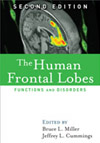
Human Frontal Lobes
Publication Date: 2006
|
 |
Edited by Bruce L. Miller
Jeffrey L. Cummings
|
|
|
|
|
|
|
About the Author |
| Bruce L. Miller, MD, is Professor of Neurology at the University of California at San Francisco (UCSF), where he holds the A.W. & Mary Margaret Clausen Distinguished Chair. He is also the clinical director of the aging and dementia program at UCSF, where he heads the State of California Research and Clinical Center and a new National Alzheimer.s Disease Research Center. For nearly two decades, Dr. Miller has been the scientific director of the John Douglas French Foundation for Alzheimer.s Disease. He has been listed in The Best Doctors in America since 1996. Dr. Miller directs a National Institutes of Health-funded program on frontotemporal dementia (FTD) called "FTD: Genes, Images, and Emotions." He has published more than 250 articles.
Jeffrey L. Cummings, MD, is Director of the Alzheimer.s Disease Research Center and the Deane F. Johnson Center for Neurotherapeutics at the University of California at Los Angeles (UCLA). He is the Augustus S. Rose Professor of Neurology and Professor of Psychiatry and Biobehavioral Sciences in the David Geffen School of Medicine at UCLA. Dr. Cummings is past president of the American Neuropsychiatric Society and the Behavioral Neurology Society. He is the recipient of several prestigious awards, including the Henderson Lectureship of the American Neurological Society. Dr. Cummings has lectured, pursued research, and published on the topics of neuropsychiatry, behavioral neurology, neurotherapeutics, and drug development. He has contributed to the understanding of the role of the frontal-subcortical circuits in the behavior of normal individuals and of persons with brain disorders, and is the author of the Neuropsychiatric Inventory, a tool used to assess behavioral changes in patients with neurological diseases.
|
|
Summary
Now in a revised and expanded second edition, this authoritative work synthesizes the rapidly growing knowledge base on the human frontal lobes and their central role in behavior, cognition, health, and disease. Leading contributors address neuroanatomy, neurochemistry, and normal neuropsychological functioning, and describe the nature and consequences of frontal lobe dysfunction in specific neurological and psychiatric conditions. Second edition features include a new section on structural and functional neuroimaging and substantially expanded coverage of frontotemporal dementia and related disorders. Other new topics include self-consciousness, competence, and personality; new testing approaches; bipolar disorder; and adult-onset genetic disorders of the frontal lobes. The book is illustrated with nearly 100 figures.
Reviews
"This book is destined to become a classic reference and to have readers eagerly anticipating the next edition. The book not only summarizes what we do know about the frontal lobes but also brings to the forefront many questions still remaining....A book that provides an intellectual pleasure cruise and is deserving of a prominent place on neuroscientists' bookshelves."
-Journal of Clinical and Experimental Neuropsychology
"Bruce Miller and Jeffrey Cummings have done a fine job in drawing together the disparate strands of current scientific knowledge that are allowing us to begin to understand this most integrative part of the brain and its particular concern with abstract subject matters....Heartily recommended to anyone interested in this daunting and emerging area of neuroscience."
-The New England Journal of Medicine
"This second edition provides the perfect framework for further integrating neurology, psychiatry, and neuropsychology in the understanding and treatment of major mental disorders. A great breadth of scientific knowledge, clinical acumen, and provocative analysis is brought to bear on enigmatic frontal lobe syndromes. Detailed and comprehensive, this is a vital reference for practitioners, investigators, and students who wish to be at the cutting edge of clinical neuroscience and multidisciplinary research."
-Paul J. Eslinger, PhD, Penn State Hershey Medical Center
"A well-written and comprehensive text from two eminent clinical neuroscientists. In keeping with a tradition of excellence, this second edition expands on the editors' highly successful first edition. A historical and conceptual overview has been added, as well as a new section on imaging that includes contributions from foremost experts. Advances in the understanding of frontotemporal dementia are also reflected in chapters emphasizing the importance of this previously understudied disease. This text is a 'must read' for anyone seriously interested in understanding the biology of behavior and the diseases that cause it to go awry."
-Charles DeCarli, MD, Department of Neurology and Center for Neuroscience, University of California, Davis
"Few areas of the brain have attracted more research than the frontal lobes. Once considered esoteric, frontal lobe disease is now a common diagnosis in patients with neurodegenerative dementias. This updated second edition, edited by two prominent leaders in behavioral and cognitive neurology, contains a thoughtfully integrated exploration of frontal lobe neuroanatomy, neurochemistry, imaging, and neuropsychology. The contributors include some of the most productive clinicians and scientists in the field. Drs. Miller and Cummings have edited a volume that deserves to become the standard reference work on the human frontal lobes."
-Marsel Mesulam, MD, Cognitive Neurology and Alzheimer's Disease Center, Feinberg School of Medicine, Northwestern University
Contents
- Overview of the Frontal Lobes
- The Human Frontal Lobes: An Introduction, Bruce L. Miller
- Conceptual and Clinical Aspects, Jeffrey L. Cummings and Bruce L. Miller
- Anatomy
- Frontal-Subcortical Circuits, Tiffany W. Chow and Jeffrey L. Cummings
- The Dorsolateral and Cingulate Cortex, Daniel I. Kaufer
- The Orbitofrontal Cortex and the Insula, Jennifer Ogar and Maria Luisa Gorno-Tempini
- Structural and Functional Asymmetries of the Human Frontal Lobes, Daniel H. Geschwind and Marco Iacoboni
- Gross Morphology and Architectonics, Danielle Andrea Carlin
- Evolution of the Frontal Lobes, Harry J. Jerison
- Neurochemistry
- Serotonin and the Frontal Lobes, Philippe Robert, Michel Benoit, and Hervé Caci
- Oiling the Gears of the Mind: Roles for Acetylcholine in the Modulation of Attention, Serena Amici and Adam L. Boxer
- The Mesocortical Dopaminergic System, Antonello Bonci and Susan Jones
- Functional and Structural Imaging Approaches
- Structural Imaging of the Frontal Lobes, Howard Rosen and David Dean
- Unifying Prefrontal Cortex Function: Executive Control, Neural Networks, and Top-Down Modulation, Adam Gazzaley and Mark D'Esposito
- Insight into Frontal Lobe Function from Functional Neuroimaging Studies of Episodic Memory, W. Dale Stevens and Cheryl L. Grady
- The Frontal Lobes and Autobiographical Memory, Margaret C. McKinnon, Eva Svoboda, and Brian Levine
- Planning and the Brain, Jordan Grafman
- Principles of Motor Control by the Frontal Lobes as Revealed by the Study of Voluntary Eye Movements, Adam L. Boxer
- Neuropsychological Functions
- Bedside Frontal Lobe Testing, Joel H. Kramer and Lovingly Quitania
- New Approaches to Prefrontal Lobe Testing, Donald T. Stuss
- Language and Frontal Cortex, Argye E. Hillis
- Self-Representation and the Frontal Lobes, William W. Seeley and Virginia E. Sturm
- Frontal Dysfunction and Capacity to Consent to Treatment or Research: Conceptual Considerations and Empirical Evidence, Laura B. Dunn, Barton W. Palmer, and Jason H. T. Karlawish
- Social Cognition in Frontal Injury, Katherine P. Rankin
- Neurological Diseases
- Frontotemporal Dementia and Related Disorders
- Clinical Aspects of Frontotemporal Dementia, Pei-Ning Wang and Bruce L. Miller
- Genetics and Neuropathology of Frontotemporal Dementia, Nigel J. Cairns, Virginia M.-Y. Lee, and John Q. Trojanowski
- Imaging Frontotemporal Dementia, Murray Grossman
- Progressive Supranuclear Palsy, Corticobasal Ganglionic Degeneration, and the Frontal Cortex, Irene van Balken and Irene Litvan
- Frontal Variant of Alzheimer's Disease, Julene K. Johnson, Arne Brun, and Elizabeth Head
- Other Neurological Disorders
- Vascular Disease of the Frontal Lobes, Ae Young Lee and Helena Chui
- Parkinson's Disease with and without Dementia and Lewy Body Dementia, Bruno Dubois, Bernard Pillon, and Ian G. McKeith
- Neurosurgical Intervention for Psychiatric Illness: Past, Present, and Future, Anthony P. Weiss, Scott L. Rauch, and Bruce H. Price
- Infectious, Inflammatory, and Demyelinating Disorders, Douglas W. Scharre
- Traumatic Brain Injury, Judith Aharon-Peretz and Rachel Tomer
- Adult-Onset Genetic Disorders Involving the Frontal Lobes, Michael D. Geschwind, Grace Yoon, and Jill Goldman
- Frontal Lobe Development in Childhood, Carole Samango-Sprouse
- Psychiatric Diseases
- Frontal Lobe Functioning in Schizophrenia: Evidence from Neuropsychology, Cognitive Neuroscience, and Psychophysiology, Susan A. Legendre Ropacki and William Perry
- Bipolar Disorder and the Frontal Lobes, Mary G. DeMay, Danijela Pavlic, and Bruce L. Miller
- Obsessive-Compulsive Disorder and the Frontal Lobes, Denys Fontaine, Vianney Mattei, and Philippe Robert
- Depression and the Frontal Lobes, Ira M. Lesser and Julia A. Chung
|
|
|
|
|